Site Visit & Route Survey
Assessment of geographic conditions and identification of suitable locations for positioning the drilling rig (Rig Side) and the pipe assembly area (Pipe Side).
SAT Company's specialized solution for safely routing pipelines, cables and underground utilities beneath natural and man-made obstacles without extensive surface disruption or route closure.
Explore HDD Services ←In civil and infrastructure projects, routing pipelines and cables beneath natural and man-made obstacles has always been one of the main engineering challenges. In the past, these operations were carried out using conventional methods such as open-cut excavation and boring (Boring) and pipe jacking (Pipe Jacking) which typically involved surface disruption, long execution times and high costs.
With the development of modern technologies and greater attention to environmental considerations, Horizontal Directional Drilling has emerged as one of the most efficient and precise methods for routing pipelines beneath obstacles.
This technology enables oil, gas, water and wastewater pipelines, as well as various cables, to pass underground without requiring road closures or surface excavation.
Horizontal Directional Drilling has roots in the traditional practices of ancient Iran. Similar techniques were used in qanat construction to convey water more than six thousand years ago. This traditional approach became a foundation and inspiration for the development of modern horizontal drilling technologies.
Before steerable drilling rigs were developed, oil, gas and water pipeline crossings were mainly executed using boring (Boring) and pipe jacking (Pipe Jacking) methods.
With more than four decades of continuous activity, SAT Company has executed numerous projects in the oil, gas and petrochemical industries, including major obstacle and river crossings using Horizontal Directional Drilling.
The company has achieved Grade 1 qualification in oil and gas transmission lines and has received a commendation from the Managing Director of the National Iranian Gas Company.
The first HDD project carried out in Iran was completed in 1383 by SAT Company in cooperation with international partners, as part of the 24-inch North Ahvaz gas transmission pipeline project crossing beneath two rivers.
SAT Company is proud to have localized HDD technology in Iran. Without relying on foreign specialists, and while achieving significant foreign-currency savings under challenging sanctions, the company has procured and developed the required hardware and software equipment.
In this process, the expertise of Iranian specialists and leading professionals has been used to design and manufacture components and assemblies and to redevelop various software systems.
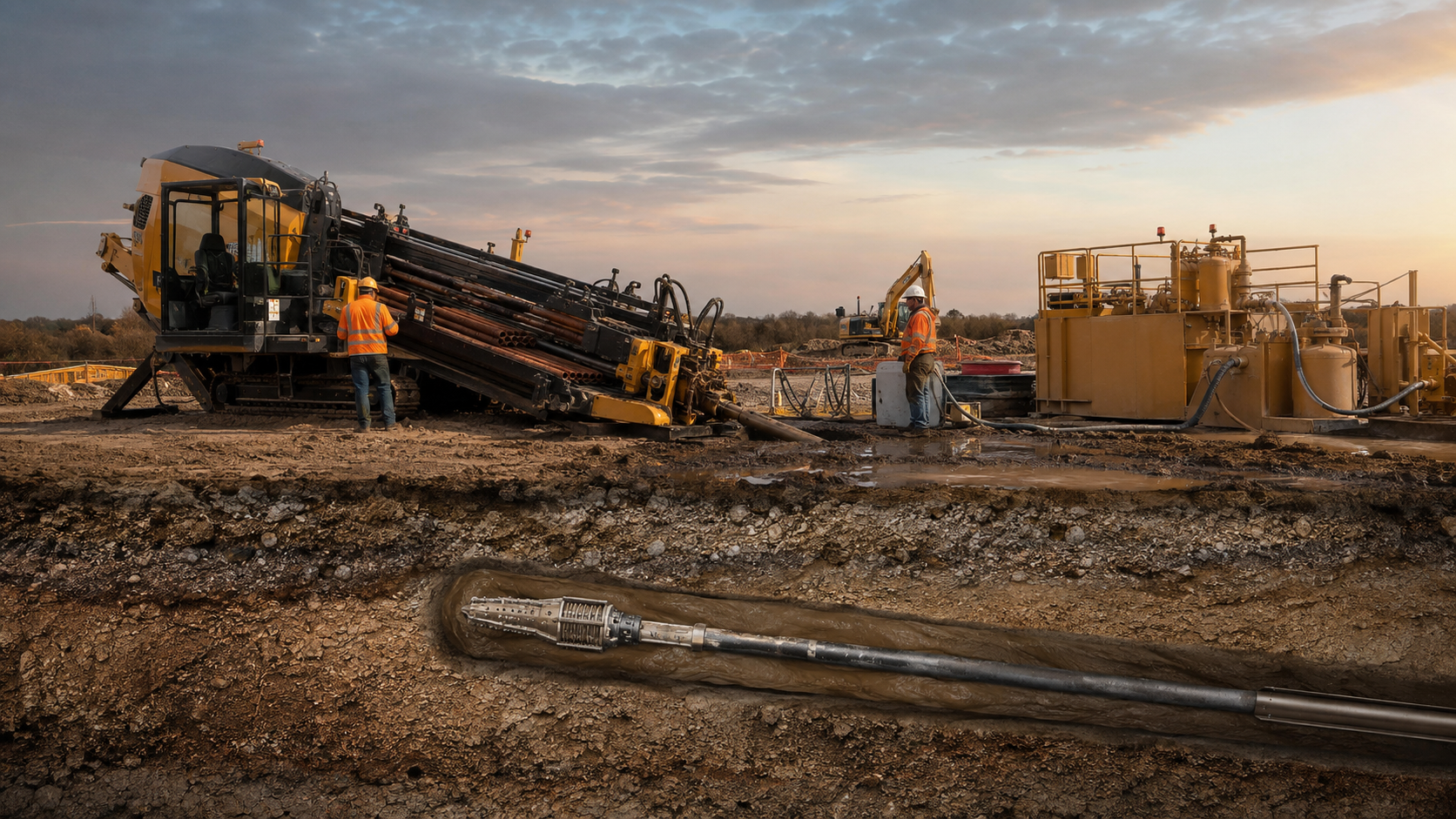
The steerable horizontal drilling machine, or Horizontal Directional Drilling Machine is among the most advanced and powerful drilling systems used worldwide.
The rig is equipped with auxiliary equipment including various drill bits, reamers, fly cutters in different sizes, drill pipes or rods, and a drilling-fluid preparation and pumping system.
Depending on site conditions, the horizontal drilling machine can operate over various lengths and accommodate pipelines ranging from 2 inches to 56 inches in diameter.
The rig's operating limits for pipeline diameter and length depend on several parameters, including required pullback force, pressure and torque. Therefore, geotechnical study results and the type and characteristics of soil layers must be considered when selecting the appropriate method and equipment.
Before Horizontal Directional Drilling operations begin, a series of carefully planned engineering activities is carried out to ensure the accuracy of the design and the reliability of execution.
Assessment of geographic conditions and identification of suitable locations for positioning the drilling rig (Rig Side) and the pipe assembly area (Pipe Side).
Drilling boreholes, identifying soil layers and preparing geological reports to select the appropriate drilling method and required equipment.
Designing the exact crossing path and determining the entry (Entry Point) and exit points (Exit Point) based on survey data.
Preparation of site-layout drawings, positioning of equipment, power-supply systems, drilling-fluid pits and other supporting facilities.
Calculation of pulling forces, stress analysis, buoyancy control and determination of technical execution parameters.
Including technical specifications, welding procedures, hydrostatic testing requirements, pipeline coatings and client-approved standards.
Preparation of a detailed schedule for drilling, installation and pipeline testing activities.
After completion of the studies, the execution plan is submitted to the relevant authorities for final review and approval.
Horizontal Directional Drilling execution consists of three main stages carried out in a precise and continuous sequence.
Initial drilling and controlled steering of the tool along the designed path while monitoring position, direction and drilling depth.
Gradual enlargement of the borehole to suit the pipeline diameter and geotechnical conditions in preparation for the final installation path.
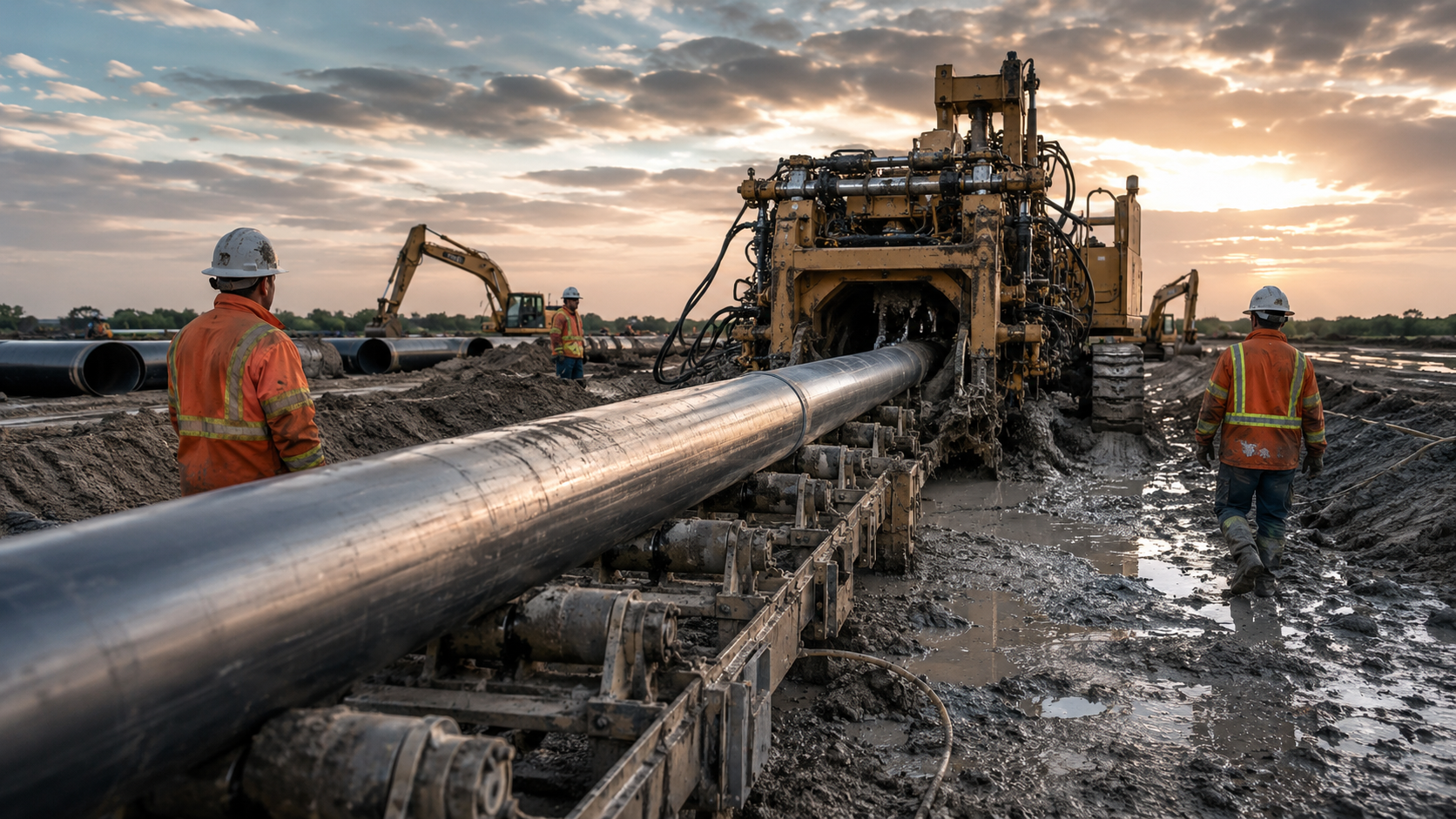
Pulling and installing the pipeline through the prepared bore while controlling pullback forces and complying with project technical and safety requirements.
Compared with conventional obstacle-crossing methods, Horizontal Directional Drilling offers significant technical, economic and environmental advantages.
Tehran, Ashrafi Esfahani Highway, north of Shahid Hemmat Expressway, Tabatabaei Street, Royal Building
Saturday to Wednesday, 8:00 AM to 5:00 PM
021-44446351-2
021-44446905-6
021-46041215
021-46041223